Looking After Your Pool Table Between Service Visits
A little regular care keeps a pool table playing well between visits from someone who actually works on tables for a living.
September 23, 2026 · 4 min read
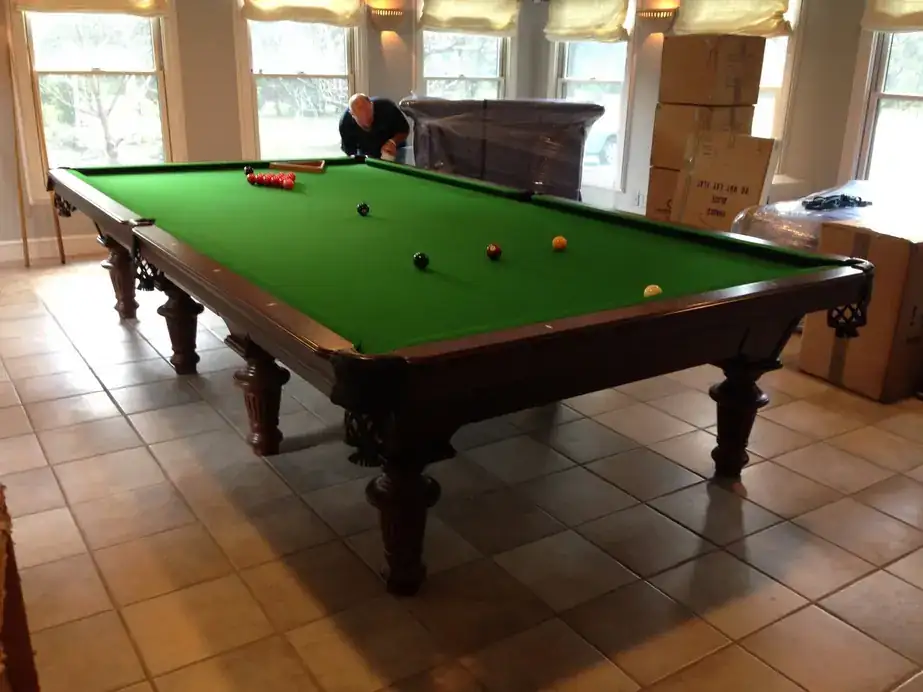
A pool table doesn't need much daily attention to stay in good shape, but a few habits make a real difference in how long the cloth lasts and how consistently the table plays between visits from someone who actually services tables for a living. Most of what protects a table is simple: keeping it clean, keeping it covered when it's not in use, and paying attention to the room it sits in. The habits below are general care, the kind any owner can keep up between visits from A+ Some Assembly Required or anyone else who services tables.
Brushing and Cleaning the Cloth
Chalk dust and hand oils build up on cloth every time the table gets played, and left alone, that buildup works into the fibers and makes the cloth feel slick rather than fast. Brushing the cloth regularly with a proper billiard brush, always in one direction rather than back and forth, lifts that buildup out before it sets in. Avoid household cleaners or anything with moisture on Simonis or any woven cloth, since wet cleaning can warp the weave or leave marks that brushing alone won't fix. A light vacuum on a low setting, held just above the surface, works better than anything wet or abrasive.
Covering the Table When It's Not in Use
Dust settles into cloth fibers the same way chalk does, and a table left uncovered in a room that isn't used daily collects more of it than most owners realize. A fitted table cover keeps dust off the cloth and protects the rails and finish from incidental bumps, spilled drinks, or anything set down on the table because it happened to be the nearest flat surface in the room. This matters even more in a garage, a finished basement that doubles as storage, or any room where the table shares space with other activities rather than being the sole purpose of the room.
Watching the Room, Not Just the Table
Wood, cloth, and even slate seams respond to the room around them. Direct sunlight through a nearby window fades cloth unevenly over time, so a table positioned out of direct light stays a consistent color far longer. Big humidity swings, common in rooms near an exterior wall or in a garage that isn't climate controlled, cause wood rails and frames to expand and contract, which can loosen joints or shift a frame slightly even if nobody touches the table. A stable, moderate room, the kind most finished basements and dedicated game rooms already are, does more to protect a table over the years than any single cleaning habit.
A Simple Habit: Check the Level Occasionally
You don't need professional tools to notice when something's changed. Set a ball gently in the middle of the table every so often and watch whether it stays put or drifts toward one side. It's not a substitute for a real leveling check, since a ball can look still on a table that's only slightly off, but a ball that clearly rolls toward the same corner every time is worth mentioning next time A+ Some Assembly Required or anyone else looks at the table. Catching a leveling problem early, before it becomes an obvious habit for every player at the table, is easier than correcting years of accumulated drift.
What Not to Do
A few habits are worth avoiding entirely:
- Setting drinks, food, or anything with moisture directly on the cloth or rails
- Leaning on the table or sitting on the rail edge, which stresses joints over time
- Using a wet cloth or household cleaner on the felt
- Leaving the table uncovered in a room that collects dust or gets direct sunlight
- Ignoring a rail that feels loose or a corner that seems to sit lower than the others
When It's Time to Call Someone
Regular care extends how long a table looks and plays well, but it doesn't replace an actual inspection. A+ Some Assembly Required's servicing checks frame stability, hardware tightness, and rail alignment, the kind of things that are hard to judge accurately from casual play alone. If the cloth is visibly thinning at the break spot, if a ball drifts the same direction every time it's left sitting still, if a rail feels loose when you press on it, or if the table has been moved or a nearby floor has settled, those are all reasons to have someone look at it rather than waiting for the problem to become obvious in every game.
Good habits between visits and a periodic professional check work together, not against each other. If it's been a while since anyone looked at your table, or something feels off when you play, call A+ Some Assembly Required in Cincinnati at (513) 258-6411 for a free estimate.
A+ Some Assembly Required, (513) 258-6411
Call (513) 258-6411More articles
What Actually Happens When a Slate Pool Table Gets Moved
A look at what goes into moving a real slate pool table, from taking it apart to setting it level again in its new home.
Buying an Antique Pool Table: The Questions Worth Asking First
Antique pool tables carry real history, but only if the slate, rails and cushions underneath are still sound.