Buying an Antique Pool Table: The Questions Worth Asking First
Antique pool tables carry real history, but only if the slate, rails and cushions underneath are still sound.
September 23, 2026 · 3 min read
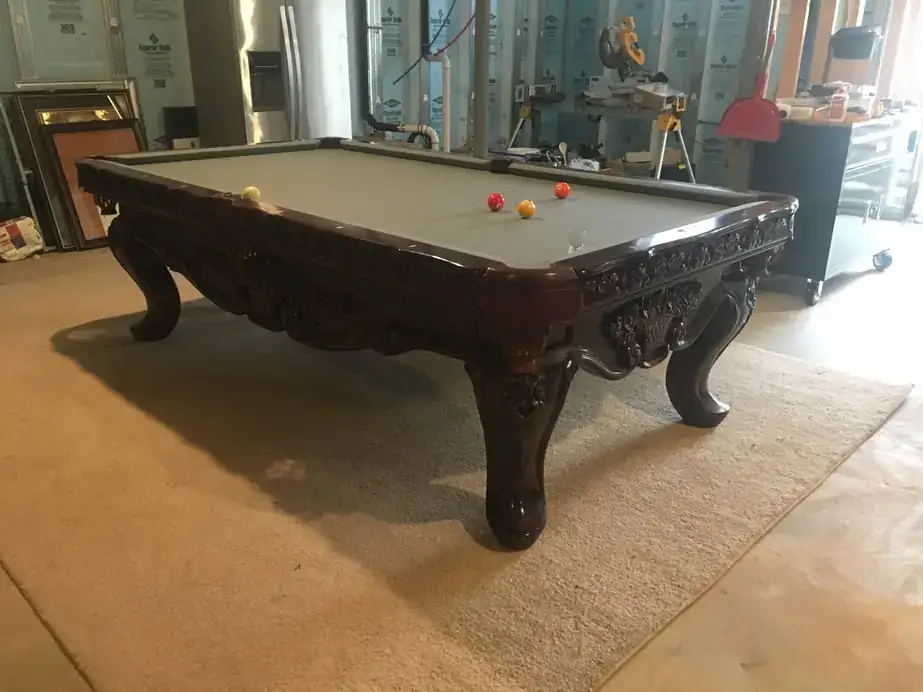
Buying an antique pool table is different from buying a new one. You're not choosing between finishes at a showroom, you're taking on a piece of furniture that might be eighty, a hundred, or more years old, built before slate thickness and cushion rubber were standardized the way they are now. A+ Some Assembly Required has restored antique Brunswick tables, and the questions that matter before you buy one are almost always about what's hidden underneath the wood, not the wood itself.
How Old, and How Do You Know?
Age matters because it tells you what kind of construction you're dealing with. A table built in the early 1900s, like the 1905 to 1910 Brunswick Hot Rod in quartersawn oak that A+ Some Assembly Required has listed for sale, comes from a different era of construction, and the slate and rail systems from that era behave differently under a cue ball than a table built in the 1980s. Ask the seller for anything that documents the table's age: a maker's mark, a serial number, old paperwork, or even family history if it's been passed down. 'Vintage-style' and 'genuine antique' get used loosely by sellers, so don't take either claim at face value without something to back it up.
What Condition Is the Slate In?
Slate is the part of an antique table most likely to have problems nobody mentions in the listing photos. Ask whether the slate is original to the table, whether it's cracked or chipped anywhere, and whether it's ever been releveled. A table that looks beautiful on top can still play badly if the slate underneath has shifted or settled unevenly over decades in someone's basement. This is also where restoration work matters most: ask how the slate was leveled and what holds it there. A+ Some Assembly Required, for its part, uses solid hardwood wedges made in-house and glued in place.
Rails and Cushions: The Parts That Wear Out First
Cushion rubber degrades with age even if nobody ever plays on the table, so an antique table's original cushions are almost never still playable, and that's normal, not a red flag on its own. Ask what the cushions have been replaced with and how recently. For reference, A+ Some Assembly Required works with Artemis cushions from Germany and Simonis cloth from Belgium. Check the rails for looseness at the joints too, since a rail that rocks even slightly will throw off every shot along that side.
Don't Skip the Frame
The frame is usually the least discussed part of an antique table, but it's what everything else sits on. Old-growth hardwood frames, common in tables from the early 1900s, tend to be heavier and more stable than modern equivalents, but decades of humidity changes in a basement or garage can still warp a frame slightly or loosen the joinery holding it together. Look for any visible gaps at the corners, sagging along the rails, or unevenness in how the table sits on the floor. A frame problem is harder and more involved to fix than a slate or cushion problem, so it's worth a careful look before you agree to buy.
Ask About Past Restoration Work, Not Just the Table's Age
A table's age tells you what it started as. Its restoration history tells you what it is now. Ask whether anyone has restored the table professionally, what was done, and whether that work is documented. One antique Brunswick A+ Some Assembly Required has listed for sale has every pocket tightened 1 inch more than factory and is set up to try out, which is the kind of detail worth asking any seller about: can you play on it before you commit, or are you buying it sight unseen based on photos alone?
A short list of questions worth bringing to any antique pool table you're considering:
- How old is the table, and what evidence supports that age?
- Is the slate original, and has it ever cracked, chipped, or been releveled?
- When were the cushions and cloth last replaced, and with what materials?
- Are the rails tight at every joint, with no rocking or gaps?
- Has the table been professionally restored, and can you see or test it before buying?
An antique pool table can be a genuine piece of history in your home for decades to come, but only if what's underneath the felt is sound. If you're considering one in the Cincinnati area, or already own one that needs a second opinion, call A+ Some Assembly Required at (513) 258-6411 for a free estimate.
A+ Some Assembly Required, (513) 258-6411
Call (513) 258-6411More articles
What Actually Happens When a Slate Pool Table Gets Moved
A look at what goes into moving a real slate pool table, from taking it apart to setting it level again in its new home.
Recovering a Pool Table: What New Cloth Involves and How to Pick a Color
New cloth changes more than the look of a pool table. Here's what recovering involves and how to choose a color you'll still like in ten years.